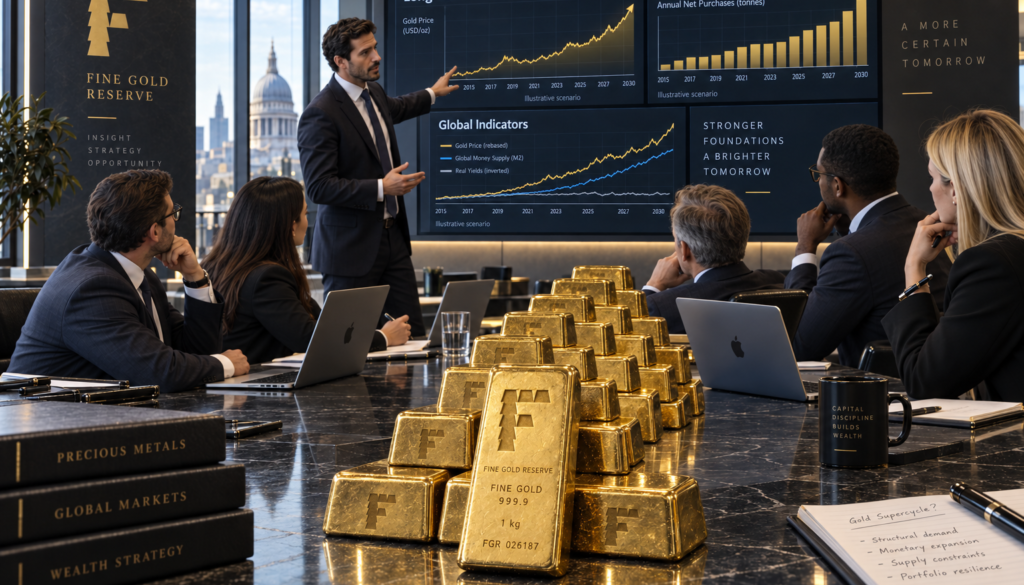
Is Gold Entering a New Supercycle?
Introduction
Gold has long been considered one of the world’s most reliable stores of value, but recent market developments have sparked a growing question among investors, analysts, and financial institutions:
Is gold entering a new supercycle?
With central banks purchasing gold at record levels, inflation concerns lingering, geopolitical uncertainty rising, and global debt reaching historic highs, many experts believe the conditions are forming for a prolonged period of strong demand for gold.
At Fine Gold Reserve, we believe understanding the forces behind potential long-term market trends can help investors make informed decisions about protecting and growing their wealth.
What Is a Commodity Supercycle?
A supercycle is an extended period—often lasting a decade or more—during which an asset experiences sustained demand growth and strong price performance driven by fundamental economic factors.
Unlike short-term market rallies, supercycles are supported by long-lasting structural trends that can reshape entire industries and investment markets.
Historically, commodity supercycles have been driven by factors such as:
- Rapid economic growth
- Industrial expansion
- Monetary policy shifts
- Supply constraints
- Global geopolitical changes
When these conditions align, prices can remain elevated for years rather than months.
Why Investors Are Discussing a Gold Supercycle
Several major developments have increased speculation that gold may be entering a new long-term growth phase.
1. Record Central Bank Gold Purchases
Central banks around the world have become some of the largest buyers of gold.
Governments are increasing reserves to:
- Diversify national assets
- Reduce currency-related risks
- Strengthen financial security
- Protect against economic uncertainty
This sustained institutional demand provides a strong foundation for long-term market support.
2. Rising Global Debt Levels
Governments worldwide continue carrying significant debt burdens.
As debt levels increase, concerns often emerge about currency stability, monetary expansion, and long-term purchasing power.
Gold has historically attracted investors during periods of fiscal uncertainty because it is not tied to government liabilities.
3. Inflation Remains a Long-Term Concern
Although inflation rates may fluctuate over time, many investors remain focused on protecting wealth from long-term currency depreciation.
Gold’s reputation as an inflation hedge continues to attract demand from both institutional and individual investors.
4. Geopolitical Uncertainty Is Increasing
Global markets face ongoing uncertainty from:
- Regional conflicts
- Trade disputes
- Economic sanctions
- Political instability
- Shifting global alliances
Historically, periods of geopolitical uncertainty have strengthened demand for safe-haven assets such as gold.
5. Growing Demand for Wealth Preservation
Investors are increasingly prioritizing risk management and capital preservation.
Rather than focusing solely on growth assets, many portfolios now include gold as a tool for:
- Diversification
- Stability
- Wealth preservation
- Long-term financial security
This structural shift in investor behavior may support sustained demand.
Supply Constraints Could Support Prices
While demand continues growing, gold supply expands relatively slowly.
Bringing new gold mines into production often requires:
- Years of exploration
- Significant capital investment
- Regulatory approvals
- Infrastructure development
Limited supply growth combined with increasing demand can create favorable conditions for long-term price appreciation.
How a Gold Supercycle Would Impact Investors
If gold is entering a supercycle, investors could benefit from several potential advantages:
Portfolio Diversification
Gold often performs differently from stocks and bonds, helping reduce overall portfolio volatility.
Inflation Protection
Gold may help preserve purchasing power during periods of rising prices.
Wealth Preservation
Many investors use gold as a long-term store of value.
Increased Institutional Demand
Continued purchases by central banks, sovereign funds, and institutional investors could support market strength.
Risks Investors Should Consider
While the outlook for gold may be positive, no market moves in a straight line.
Investors should understand that:
- Gold prices can experience short-term volatility.
- Economic conditions may change unexpectedly.
- Interest rate movements can influence demand.
- Market sentiment can impact short-term performance.
A disciplined, long-term approach remains important.
What Analysts Are Watching
Several indicators may help determine whether a true gold supercycle is emerging:
- Central bank buying activity
- Inflation trends
- Global debt levels
- Currency market developments
- Geopolitical risks
- Gold supply growth
- Institutional investment flows
Continued strength across these factors could reinforce the supercycle narrative.
The Fine Gold Reserve Perspective
At Fine Gold Reserve, we view gold’s long-term outlook through the lens of wealth preservation and financial resilience.
Whether or not the current environment develops into a full supercycle, the underlying fundamentals supporting gold remain compelling.
Central bank accumulation, limited supply, economic uncertainty, and growing investor demand continue to reinforce gold’s position as one of the world’s most trusted assets.
Conclusion
The idea of a new gold supercycle is gaining attention because many of the conditions that have historically supported long-term bull markets are present today.
Record central bank purchases, inflation concerns, rising debt levels, geopolitical uncertainty, and supply constraints all contribute to a favorable environment for gold.
While no outcome is guaranteed, gold’s enduring role as a store of value and wealth preservation asset continues to attract investors around the world.
For those seeking long-term financial security, gold remains a strategic asset worth considering as part of a diversified investment portfolio.
With Fine Gold Reserve, investors can gain access to one of history’s most respected and resilient stores of value.